LanGeek is a multilingual language-learning platform created to make learning languages more structured, visual, practical, and accessible. The platform brings together vocabulary, grammar, pronunciation, reading, dictionary tools, review systems, and AI-powered language analysis to support learners from beginner to advanced levels.
What Is LanGeek?
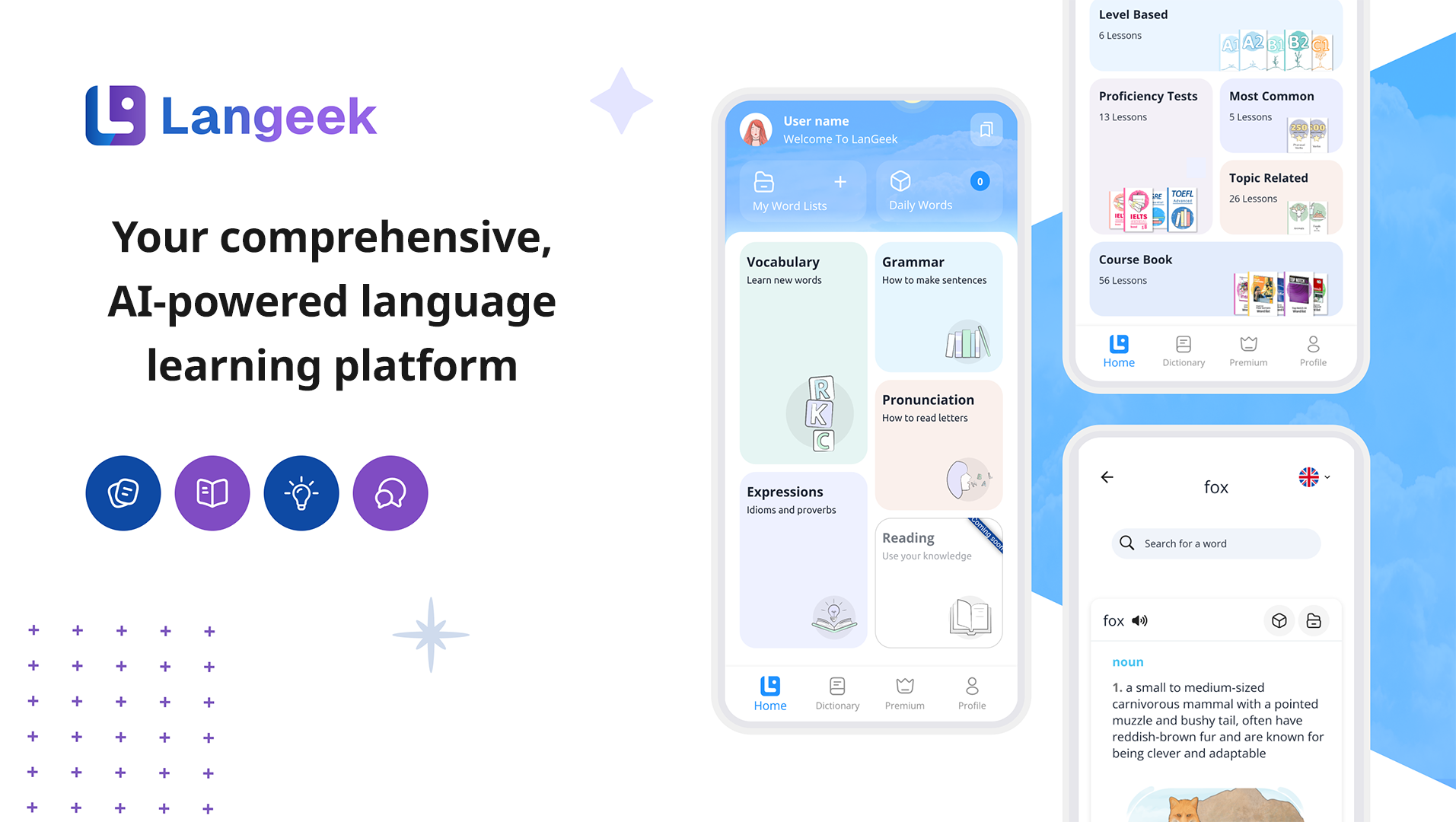
LanGeek is designed as an all-in-one environment for language learners. Instead of separating vocabulary, grammar, pronunciation, reading, and review into disconnected tools, LanGeek connects them inside one learning experience. Learners can study new words, understand how they are used, hear their pronunciation, review them through structured practice, and explore related grammar or sentence patterns.
The platform currently supports learning resources for English, Spanish, French, and German, with English offering the broadest range of lessons, tools, and advanced learning features. LanGeek is available through the web and mobile apps, allowing learners to continue their progress across different devices.
LanGeek’s main goal is to help learners move beyond memorizing isolated words. The platform focuses on meaning, context, pronunciation, visual learning, repetition, and real-world use.
Our Mission
LanGeek was built around a simple idea: language learning should be clear, organized, and useful in real communication. Many learners struggle because resources are scattered across different websites, apps, dictionaries, and grammar references. LanGeek aims to bring these essential tools together in a structured learning system.
The mission of LanGeek is to make high-quality language-learning content easier to access and easier to use. The platform combines educational content, visual materials, audio, smart review tools, and language technology to help learners understand, remember, and apply what they learn.
History and Background
LanGeek was founded in 2020 by Ali Shahdoost, Hossein Shahdoost, Nima Shahdoost, and Yasaman Sifarian. The platform was created to offer a more complete and focused approach to language learning, avoiding unnecessary complexity while still giving learners access to serious educational tools.
LanGeek first launched in January 2021. From the beginning, the goal was to create a cohesive platform that could support different parts of the learning process, including vocabulary building, grammar study, pronunciation practice, reading, and long-term review.
The same team is also behind B-amooz, an established language-learning platform with more than one million users. This experience helped shape LanGeek’s focus on practical learning tools, organized content, and scalable educational technology.
How LanGeek Approaches Language Learning
LanGeek’s learning system is influenced by established ideas in language acquisition, vocabulary learning, and cognitive psychology. The platform is designed around the belief that learners need repeated exposure, understandable input, clear explanations, and meaningful context.
Vocabulary as a Foundation
Vocabulary knowledge is central to communication. LanGeek supports vocabulary learning through definitions, translations, example sentences, images, pronunciation, word categories, and review tools.
Context and Comprehensible Input
Learners understand language better when they see words and grammar in meaningful context. LanGeek uses examples, reading passages, expressions, and sentence-based tools to show how language works in real use.
Spaced Repetition
LanGeek uses structured review systems, including the Leitner method, to help learners revisit words at effective intervals and improve long-term retention.
Visual and Audio Learning
Images, pronunciation audio, phonetic information, and visual word relationships help learners connect meaning, sound, spelling, and usage more effectively.
What LanGeek Offers
LanGeek includes a wide range of content and tools for learners who want to build language skills step by step. The platform is organized to support both independent study and targeted practice.
| Learning Area | What LanGeek Provides |
|---|---|
| Vocabulary | Structured wordlists, thematic vocabulary categories, level-based vocabulary, definitions, translations, examples, images, and review tools. |
| Expressions and Idioms | Curated collections of idioms, expressions, and common language patterns with explanations and contextual examples. |
| Grammar | Multi-level grammar lessons that explain sentence structure, word forms, grammatical rules, and usage patterns in a clear and learner-friendly way. |
| Pronunciation | Pronunciation lessons, audio support, phonetic information, and AI-assisted pronunciation tools that help learners understand how words sound. |
| Reading | Reading passages and comprehension-focused materials that expose learners to vocabulary and grammar in longer, meaningful contexts. |
| Practice and Review | Flashcards, quizzes, Leitner-based review, spelling exercises, word review, daily practice, user stats, and personal wordlists. |
LanGeek Picture Dictionary
The LanGeek Picture Dictionary is the largest and most popular online picture dictionary available. It helps learners understand vocabulary through images, definitions, examples, pronunciation, translations, and related word information.
Unlike traditional dictionaries that rely mostly on text, the LanGeek Picture Dictionary uses visual learning to make words easier to understand and remember. This is especially helpful for learners who want to connect vocabulary with real-world objects, actions, concepts, and situations.
The Picture Dictionary includes dedicated sections for English, Spanish, French, and German. English currently has the most complete set of advanced dictionary features, while the multilingual dictionary continues to expand.
By combining visual content with definitions, pronunciation, examples, and study tools, the LanGeek Picture Dictionary serves both as a dictionary and as a vocabulary-learning resource.
AI-Powered Learning Tools
LanGeek uses AI and language-processing technology to make language learning more interactive and context-aware. These tools are designed to support learners while keeping the learning experience structured and educational.
Syntax-Sense
Syntax-Sense helps analyze language patterns in texts, including structures such as idioms, collocations, and grammar-related elements.
Smart Lookup
Smart Lookup helps learners understand words in context by offering more relevant meanings based on usage.
Word Family Tree
Word Family Tree shows relationships between related words, helping learners understand word formation and vocabulary families.
PhonoMap
PhonoMap provides detailed pronunciation support, including phonetic breakdowns, syllabification, stress patterns, spelling-to-sound relationships, and transliteration for select languages.
Practice, Review, and Progress
Learning a language requires more than exposure to new content. Learners also need repeated practice, progress tracking, and tools that help them return to difficult words and structures. LanGeek includes several features designed for active learning and long-term retention.
- Flashcards help learners review words with definitions, examples, images, and pronunciation.
- The Leitner System supports spaced repetition by helping learners review words at planned intervals.
- Quizzes help learners test vocabulary, grammar, pronunciation, and comprehension.
- Word Review helps learners return to words they have studied and strengthen memory over time.
- User Stats help learners follow their progress and maintain consistent study habits.
- Personal Wordlists allow learners to collect, organize, and study vocabulary based on their own learning goals.
LanGeek on Web and Mobile
LanGeek is available on web, Android, and iOS, giving learners flexible access to lessons, vocabulary tools, dictionary content, review features, and practice materials.
The mobile experience is designed for learners who want to study anywhere, review vocabulary, use dictionary tools, and continue their learning outside the desktop environment.
The Team Behind LanGeek
LanGeek is built by a multidisciplinary team that brings together language education, software development, artificial intelligence, design, illustration, and user support.
Linguists and Language Experts
Language specialists work on vocabulary organization, grammar explanations, definitions, translations, pronunciation resources, and the overall structure of educational content.
Writers and Editors
Writers and editors create example sentences, explanations, reading materials, and learner-friendly descriptions that make the platform clear and accessible.
Developers and Product Engineers
Web and mobile developers design and maintain the platform’s learning environment, interactive tools, user experience, and cross-platform functionality.
AI and Data Specialists
AI specialists and machine learning engineers develop language-analysis tools, pronunciation-support systems, contextual lookup features, and recommendation-related technologies.
Designers and Illustrators
Designers and illustrators create the visual materials that support LanGeek’s picture-based vocabulary learning and educational interface.
Support and Communication Team
Support and communication specialists help users, collect feedback, answer questions, and maintain clear communication with the LanGeek learning community.
LanGeek and B-amooz
LanGeek was created by the same team behind B-amooz, an established language-learning platform with more than one million users. The experience gained from building B-amooz helped shape LanGeek’s educational structure, content organization, and learner-focused design.
LanGeek builds on that experience with a broader learning environment, multilingual tools, visual vocabulary resources, AI-powered features, and structured content designed for learners across different levels.
Looking Ahead
LanGeek continues to grow as a language-learning ecosystem. The platform is expanding its dictionary content, visual vocabulary resources, AI-powered tools, grammar materials, reading resources, and mobile learning experience.
As LanGeek develops, its focus remains the same: helping learners understand languages more clearly, remember vocabulary more effectively, and use what they learn with greater confidence.